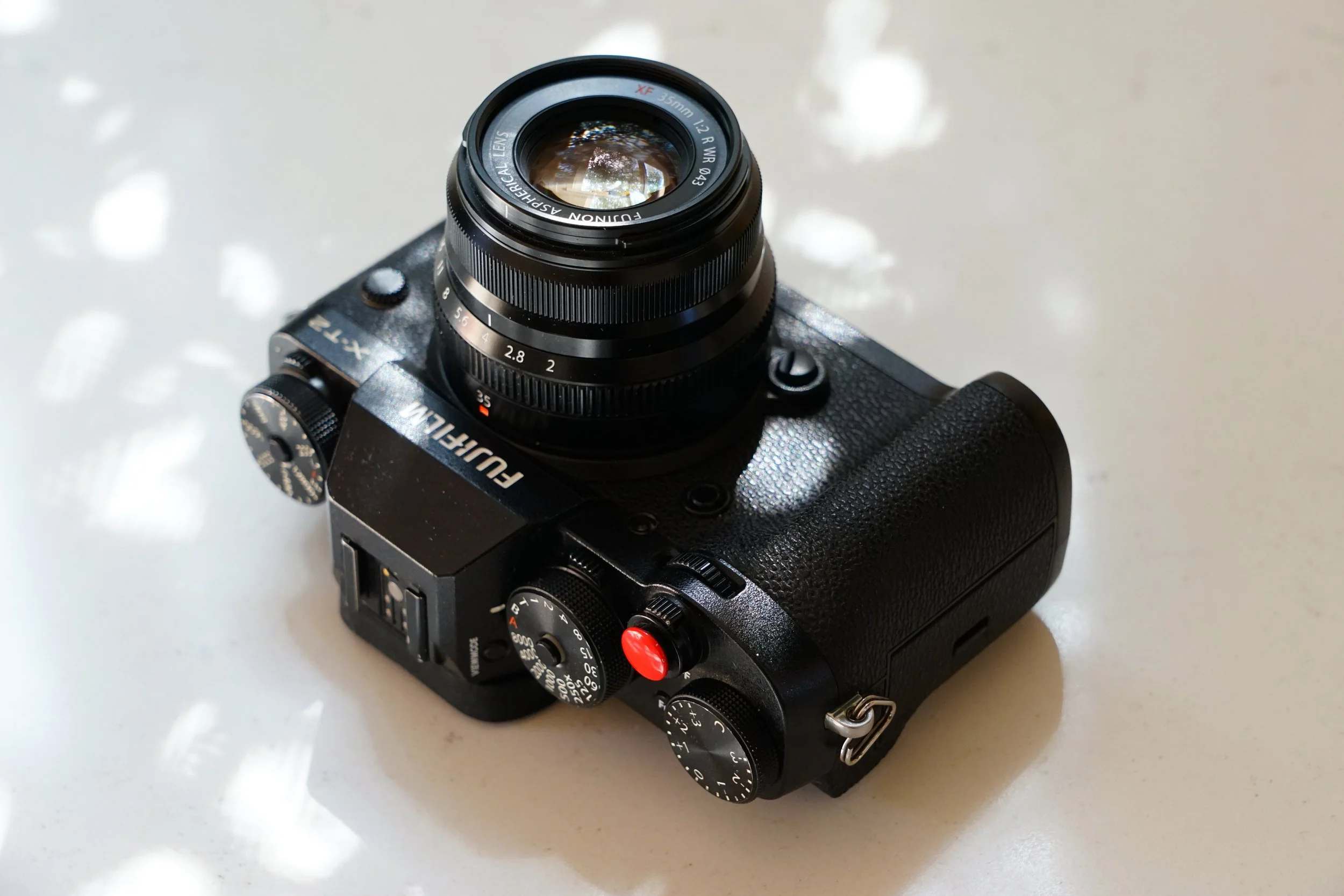
Review: Fujifilm XF 35mm f/2 R WR
This is one of the quintessential Fuji lenses, and for good reason.
It's small; that means it balances well on all kinds of Fuji bodies. It's fast enough; Leica's f/2 Summicrons are often all a person needs, and the Fuji f/2's are called Fujicrons for a reason. It has a fast autofocus motor; that makes a difference on older bodies because with the limited camera intelligence, once the camera figures where to focus, the lens better get there fast.
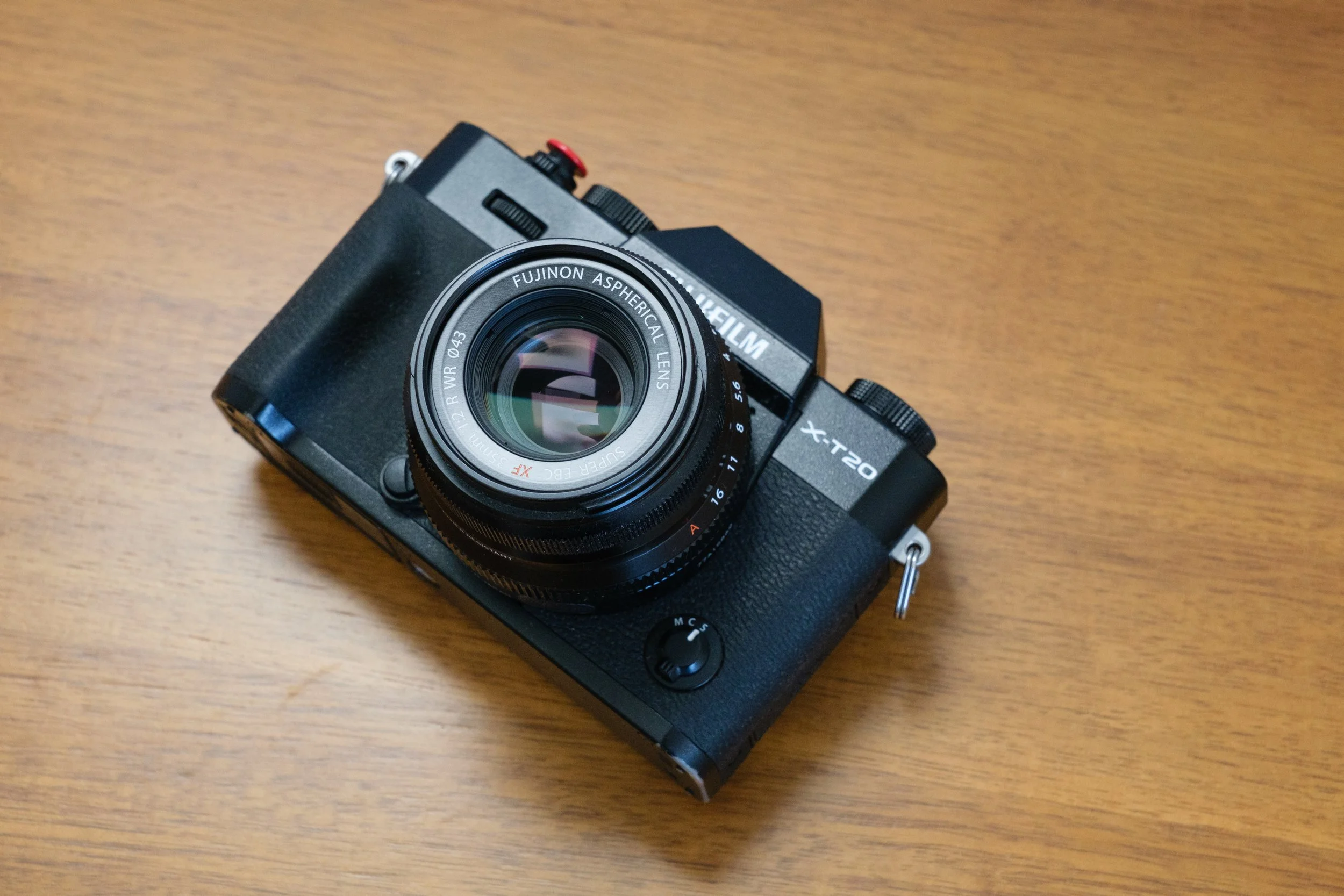
And it's good-looking. Very good-looking, in fact. The shape evokes classic Voigtlander M-mount lenses. The aperture ring and the red alignment mark helps. Although all Fujicrons share a similar design, this is probably the best-proportioned of the bunch; the 23 and 50 both seem a bit long by comparison, and the 16mm f/2.8 just looks fussy because the front flares out. The aperture ring has buttery yet distinct clicks, among the best of Fuji lenses (and I've owned quite a few), a joy to play with even before the camera turns on.
All positives so far, and I haven't even gotten to image quality. 3 copies have passed through my hands, and they all seem well-centered and quite sharp corner to corner even at f/2.






This was the first small weather-resistant prime for the Fuji X-mount, and being able to semi-aim to shoot in the rain and snow and get both a decent hit rate (thanks to the fast autofocus) and more than good enough image quality was a revelation. This lens witnessed rain and snow in New York City, and captured them with more drama than my own fuzzy memory and infinite depth-of-field eyes could. This lens is more than 10 years old now, but is sought after even today.





However, this lens also made me mistakenly think the 50mm equivalent field of view was not for me.
You see, 35mm f/2 on Fuji's APS-C sensors is 52.5mm f/3 in terms of full-frame equivalent. The 52.5mm field-of-view is close to human eyes, but f/3 doesn't really make that much bokeh, so too often, without dramatic lighting, occasion or weather, the images just come out close to life and... flat.

The ~50mm field of view was often heralded as the best introduction to camera- and prime-based photography, but back in the DSLR days, with the 50mm lens came f/1.8 at less than $150 new. That was an unprecedented amount of subject separation; suddenly, you have depth of field as a creative element to play a lot with.
A 35mm f/2 on APS-C, at ~$300 used, is just not the same.

But that's not the fault of the lens itself. This is still a fantastic lens in 2025, and I got some truly lovely pictures with it.